

- Analytics
- Market Sentiment
CFTC report from July 19 covered information available on July 16
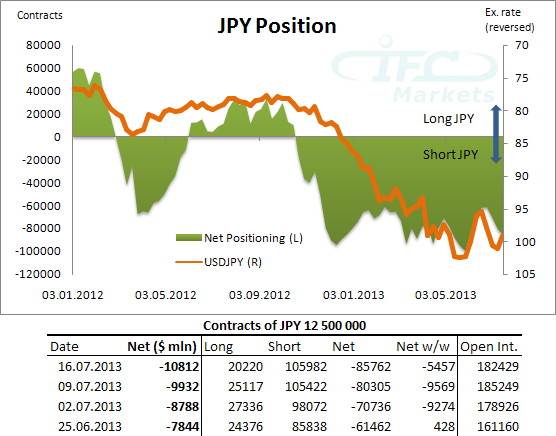
According to the CFTC report, market participants keep holding net short speculative positions vs. the US dollar on all major currencies. The largest net short position is seen in descending order on: the Japanese yen, the Australian dollar and the euro. Slightly smaller volumes of short positions are observed on the British pound and the Canadian dollar. Even though the Swiss franc positioning confirms the predominance of short positions, it is very close to a state of balance.
According to the latest report, the largest negative change in the positioning was occurred on the Japanese yen and the Australian dollar. Net short positions on the European currency and the Canadian dollar decreased slightly, but could not affect the overall positioning quite seriously.
Generally, the current positioning is in line with our medium-term forecasts. We expect a large-scale strengthening on the American currency in the second half of the year. Short positions on the Japanese yen, the euro and the British pound seem to be especially interesting from a strategic point of view.
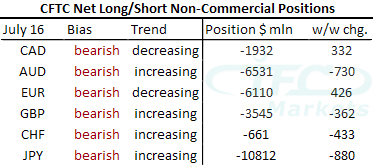
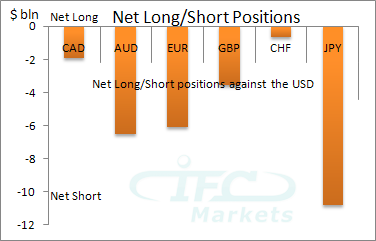
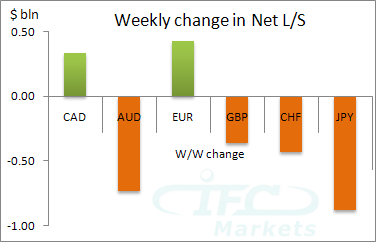
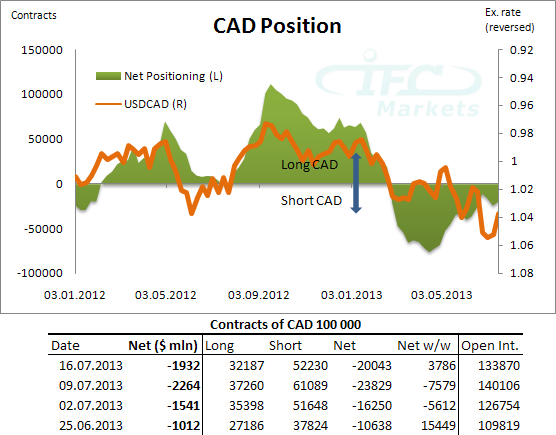
The net short position on the Canadian dollar fell by 0.3 billion USD, down to -1.9 billion USD. Despite this fact, the sentiment remains bearish.
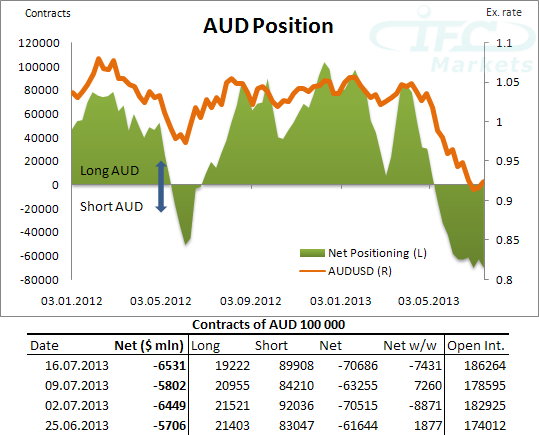
The Australian dollar keeps holding a significant net short position vs. the US dollar. Last week, it rose even to -6.5 billion USD. The Australian dollar moves to the second place by the largest net short position, following only the Japanese yen.
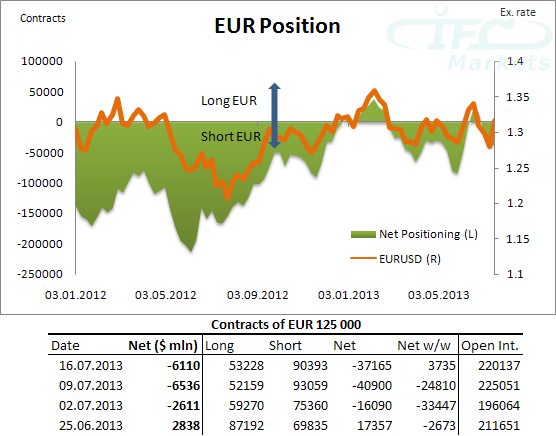
The volume of the net short positions on the European currency declined by 0.4 billion USD, down to -6.1 billion USD. The bearish sentiment is prevailing.
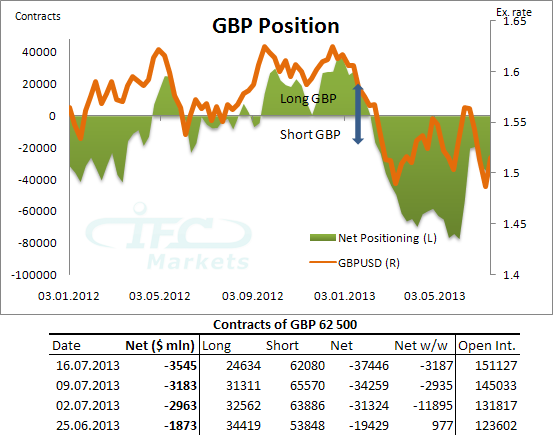
The net short position on the British pound rose to -3.5 billion USD. The bearish sentiment is prevailing.
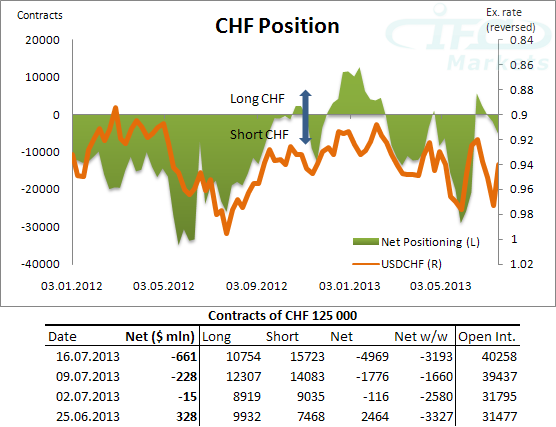
Even though the net position on the Swiss franc remains close to a state of complete balance it still remains short. The sentiment is neutrally negative.
Yen firmly holds the leadership by the largest net short position against the US dollar. Last week, it rose to -10.8 billion USD, showing the most significant change in positioning. The sentiment remains bearish.
New Exclusive Analytical Tool
Any date range - from 1 day to 1 year
Any Trading Group - Forex, Stocks, Indices, etc.
Note:
This overview has an informative and tutorial character and is published for free. All the data, included in the overview, are received from public sources, recognized as more or less reliable. Moreover, there is no guarantee that the indicated information is full and precise. Overviews are not updated. The whole information in each overview, including opinion, indicators, charts and anything else, is provided only for familiarization purposes and is not financial advice or а recommendation. The whole text and its any part, as well as the charts cannot be considered as an offer to make a deal with any asset. IFC Markets and its employees under any circumstances are not liable for any action taken by someone else during or after reading the overview.
- Get Certificate






Last Sentiments
- 18Mar2021Weekly Top Gainers/Losers: Canadian dollar and Japanese yen
Over the past 7 days, prices for oil, non-ferrous metals and other mineral raw materials decreased but still remained high. As a result, the currencies of the commodity countries strengthened: the Canadian dollar, the Australian and New Zealand dollars, the Mexican peso, and the South African rand. The...
- 10Mar2021Weekly Top Gainers/Losers: Canadian dollar and New Zealand dollar
Оil quotes continued to rise over the past 7 days. Against this background, the currencies of oil-producing countries, such as the Russian ruble and the Canadian dollar, strengthened. The New Zealand dollar weakened after the announcement of negative economic indicators: ANZ Business Confidence and...
- 4Mar2021Weekly Top Gainers/Losers: American dollar and South African rand
Over the past 7 days, oil quotes continued to grow. Precious metals, including gold, fell in price. Against this background, the shares of oil companies increased, the Russian ruble strengthened, the Australian and New Zealand dollars, as well as the South African rand, weakened. The US dollar strengthened...