

- Education
- Introduction to Trading
- Floating and Fixed Spread
What Is Spread Trading - Fixed Spread vs Floating Spread
Open any forex platform and quote a currency pair, and you'll notice the price you can sell at is never quite the same as the price you can buy at. That tiny gap is the spread, and it's a part of the cost of every single trade you place. A lot of traders learn price charts, indicators, and news events long before anyone explains what that gap actually is or why it changes size depending on the broker, the pair, and the time of day.
We are going to explain what spread trading actually means, how the spread works in forex specifically, what the bid offer spread is doing to your entry price, and how fixed and floating spreads compare using real numbers from a real broker.
Key Moments
- Spread is baked into every trade you place, because of the gap between the buy and sell price.
- The bid offer spread is essentially the cost of doing business with your broker, and it changes depending on the market and the asset.
- Brokers offer either fixed or floating spreads, and picking the right one can genuinely affect how much you pay over time.
- Understanding spreads helps you read the real cost of a trade before you even open a position, which is something a lot of beginners skip past.
What is Spread Trading
Spread trading is the buying and selling based on the difference between two prices. This difference is the gap between what you can buy something for and what you can sell it for at the same moment, and that gap is called the spread. Every time you open a trade, you're dealing with this spread, because it's built into the price quote itself. Some traders take this further and build entire strategies around spreads, for example, trading the difference between two related instruments, like two currency pairs or two commodities, betting on how that gap will change rather than on the price of either one alone. But even for someone just placing a straightforward buy or sell order, the spread is shaping the cost of that trade.
How Spread Works in Forex
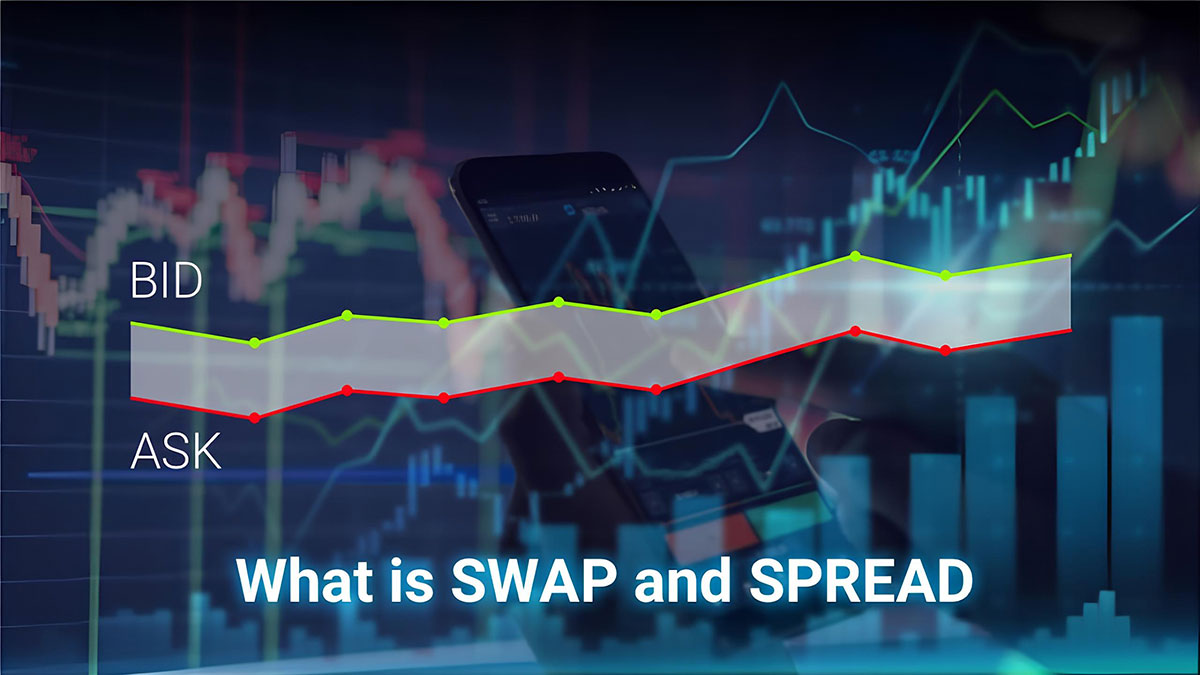
In the forex market, every currency pair is quoted with two prices at the same time: the price at which you can sell (the bid) and the price at which you can buy (the offer, or ask). The difference between these two numbers is the spread, and it's usually measured in pips, these are small units, used to track price movement in currency pairs. So if EUR/USD is quoted at 1.0850 to sell and 1.0852 to buy, the spread is 2 pips. That gap might look tiny, but it matters, because the moment you open a trade, the market needs to move in your favor by at least that amount just for you to break even. You can read more detailed about pip in our article "What is a pip in Forex".
For example if you are trading with IFC Markets, on their MT4 platform, IFC Markets runs a "Classic Standard" account with a fixed spread starting from 1.8 pips on EUR/USD, so if EUR/USD is trading around 1.0850, you might see a buy price of roughly 1.0868 and a sell price of 1.0850, a locked in 1.8 pip gap regardless of what the market is doing. Switch over to its MT5 platform and the "Direct" account type instead, and the spread becomes floating, quoted from as low as 0.4 pips on EUR/USD, meaning during calm, liquid trading hours that same pair might show a buy price of just 1.0850.4 against a sell price of 1.0850, a much tighter gap than the fixed option. The risk is that this 0.4-pip is a starting point, during news events or thin overnight trading, that floating spread can widen well beyond 1.8 pips, temporarily flipping the advantage back to the fixed account. This is exactly why IFC Markets, like most brokers, offers both spread types side by side, neither one is better, they just suit different situations.
What is the Bid Offer Spread
The bid offer spread is the difference between the price a buyer is willing to pay for an asset and the price a seller is willing to accept for it. The "bid" is what someone will pay you if you're selling, and the "offer" (or "ask") is what you'll have to pay if you're buying. Whatever sits between those two numbers is the spread, and it's essentially built-in cost that goes to the broker or market maker for facilitating the trade.
Traders pay close attention to this spread for a few reasons.
First, it directly affects profitability, a wider spread means the market has to move further before a trade turns a profit, so tighter spreads are more favorable, especially for short-term traders who are in and out of positions quickly.
Second, the spread can act as a signal of market conditions: spreads tend to widen during times of low liquidity or high uncertainty, like around major news releases, and narrow when trading is calm and active. Scalpers and day traders in particular watch spreads closely, since they're making many trades a day and even small differences add up fast. Longer term traders care less about tiny spread changes, since they're holding positions for longer and the spread becomes a smaller part of the overall picture.

Not sure about your Forex skills level?
Take a Test and We Will Help You With The Rest
Fixed Spread vs Floating Spread
Brokers offer one of two spread models: fixed or floating, and the difference between them comes down to how consistent that buy-sell gap stays over time.
A fixed spread stays the same no matter what's happening in the market, whether it's a quiet Tuesday afternoon or a chaotic moment right after a central bank announcement, the spread you're quoted doesn't change. This gives you predictability, which is useful if you like knowing your trading costs in advance and don't want surprises. A floating spread, on the other hand, moves with the market. During calm periods it might be very tight, sometimes tighter than a fixed spread would be, but during volatile moments, like major economic data releases, it can widen significantly, sometimes by a lot.
IFC Markets is a good example of a broker that lays this choice out clearly, because it runs both models side by side across its account types:
- Classic Standard / Classic Nano accounts (fixed spread): spreads start from 1.8 pips, with a $1,000 minimum deposit for Classic Standard or $15 for Classic Nano, and leverage up to 1:200 or 1:400 depending on the account.
- Direct Standard / Direct Nano accounts (floating spread): spreads start from 0.4 pips, with the same deposit tiers, but the cost moves with market conditions instead of staying fixed.
- MT4 accounts are fixed-spread only, starting from 1.8 pips.
- MT5 accounts run on floating spreads, starting from 0.4 pips.
- NetTradeX, IFC Markets' own platform, offers both fixed and floating versions of its Standard and Beginner accounts, so traders can pick either model on the same platform.
This kind of side by side choice matters more than people expect. If you're a news trader who often trades right around big announcements, a floating spread (like IFC Markets' Direct or MT5 accounts) could catch you off guard, since the cost of entering a trade can spike well past its usual 0.4-pip starting point right when you need to move fast. In that situation, some traders prefer a fixed-spread account, like Classic Standard, for the certainty, even though 1.8 pips is wider on an average day.
On the flip side, if you mostly trade during normal, liquid market hours and avoid high volatility windows, a floating spread account can genuinely save you money, since it's often running well below that fixed 1.8 pip level.
Scalpers and short-term traders who need tight costs on calm days often lean toward floating-spread accounts, since low volatility usually means low spreads. Traders who deal heavily with news events, or who just want to know exactly what a trade will cost regardless of market chaos, tend to prefer fixed-spread accounts.

Longer term position traders often don't worry too much either way, as we already said, since the spread is a smaller factor compared to the overall price movement they're aiming to capture, and the deposit and leverage terms of the account (like the $1,000 vs. $15 minimum, or 1:200 vs. 1:400 leverage) end up mattering more to their choice than the spread type itself.
Conclusion
Spreads aren't hidden fees, they're right there in the price every time you trade, built into the gap between buying and selling. Once you understand what the bid offer spread actually represents, and how fixed and floating spreads behave differently depending on market conditions, you're in a much better position to judge the real cost of any trade you're considering. It's a small detail, but it's one that adds up, especially the more frequently you trade, so it's worth understanding well before it becomes an expensive blind spot.
FAQs
How does Forex Work?
Forex (Foreign Exchange) is a huge network of currency traders, who sell and buy currencies at determined prices, and this kind of transfer requires converting the currency of one country to another. Forex trading is performed electronically over-the-counter (OTC), which means the FX market is decentralized and all trades are conducted via computer networks.
What is Forex Market?
The Forex market is the largest and most traded market in the world. Its average daily turnover amounted to $6,6 trillion in 2019 ($1.9 trillion in 2004). Forex is based on free currency conversion, which means there is no government interference in exchange operations.
What is Forex Trading?
Forex trading is the process of buying and selling currencies at agreed prices. Most currency conversion operations are carried out for profit.
What is The Best Forex Trading Platform?
IFC Markets offers 3 trading platforms: MetaTrader4, MetaTrader5, NetTradeX. MT 4 Forex trading platform is one of the most downloaded platforms which is available on PC, iOS, Mac OS and Android. It has different indicators necessary for making accurate technical analysis. NetTradeX is another trading platform offered by IFC Markets and designed for CFD and Forex trading. NTTX is known for its user-friendly interface, reliability, valuable tools for technical analysis, distinguished functionality and the opportunity to create Personal Composite Instruments (PCI) which is available specifically on NetTradeX.

Was this article helpful?

 You can study CFD trading more thoroughly and see CFD trading examples in the section How To Trade CFDs Visit Educational Center
 Register with IFC Markets Now
Global Access to Financial Markets from a Single Account
