Iran Currency Collapse and BRICS Stress Test | IFCM
Logo IFCMarkets
NetTradeX for IFC Markets
Trading App
IFC Markets - 外匯交易

Iran Currency Collapse and BRICS Stress Test

Iran Currency Collapse and BRICS Stress Test

So, here is what we have; Iranian Rial basically collapsed in early 2026. And it’s happening because the currency is failing, security is breaking down, and diplomatic strategies aren’t working either. By January 2026, the Rial had already smashed all its previous records.

Let’s dig into what’s really behind this collapse, and how it ties into the bigger picture: the geopolitical battle with the United States, the unrest happening inside Iran, and what this could mean for the BRICS alliance moving forward.


The Mechanics of the Rial’s Freefall


Here is how the Rial ended up in freefall. What we’re seeing now is the result of economic pressure mixed with political manure that finally hit a breaking point in late 2025.


1. The “Snapback” and the Liquidity Choke

It really starts with the UN “snapback”; in September 2025, European powers triggered it, which meant all the pre-2015 sanctions came back into force, that move effectively cut Iran off from what little access it still had to the global financial system.

Central Bank assets were frozen again, and the so-called “wind-down” periods for existing oil contracts expired on January 1, 2026. Once Iran could no longer bring its oil dollars back home, the Central Bank lost its ability to intervene in the currency market. And when a government can’t sell dollars to defend its own currency, the exchange rate goes vertical.


2. The Inflationary Budget Deficit

At the same time, Iran’s 2025 - 2026 budget deficit ballooned to about 1,800 trillion tomans. To cover that gap, the government leaned heavily on monetary expansion, basically printing money to keep paying civil servants and to fund its regional military commitments.

By late 2025, annual inflation had jumped to 48.6%, and food prices alone were up 72%. At that point, the Rial stopped functioning as a store of value. You could see it on the ground: merchants in Tehran’s Grand Bazaar started closing their shops in December 2025 because prices were changing so fast they couldn’t even keep up hour to hour.


3. The End of Subsidized Exchange Rates

Then came another shock. In an attempt to reduce corruption and narrow the deficit, President Pezeshkian’s administration began rolling back preferential exchange rates for many imports.

Importers who had been getting dollars at official rates, like 42,000 or 285,000 IRR, were suddenly pushed into the open market, where the rate was closer to 1.4 million IRR. That caused an immediate surge in demand for US dollars, punched the Rial lower overnight, and instantly doubled the cost of things like medicine and technology.


BRICS as a Target


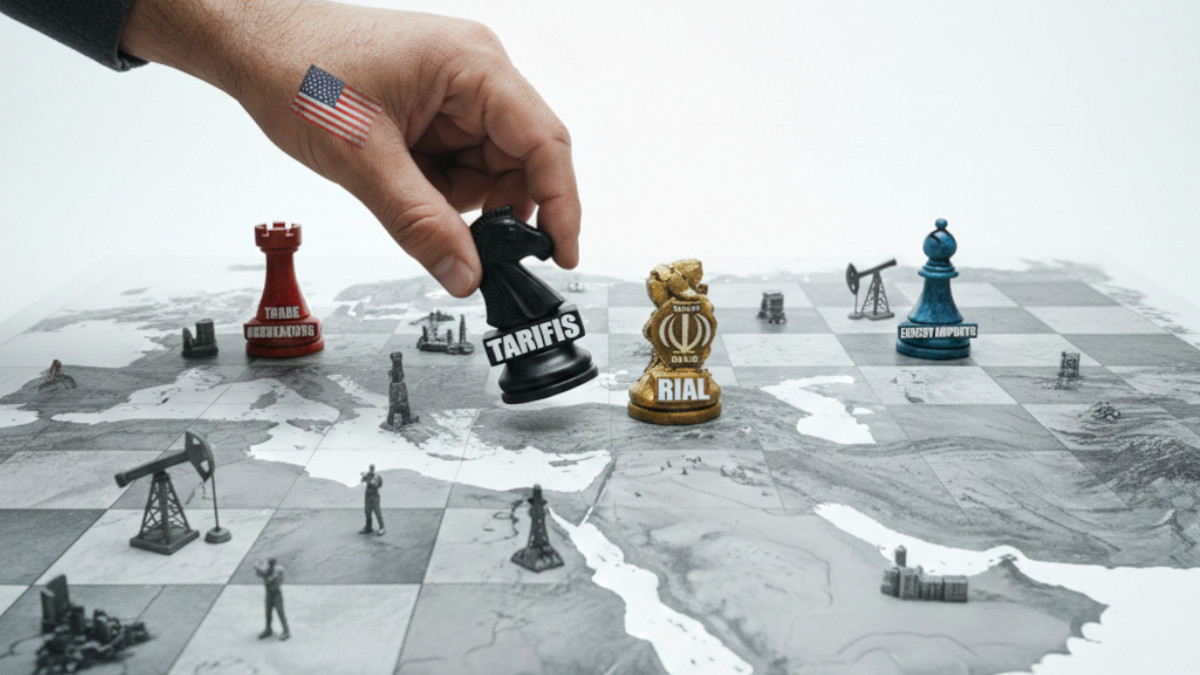
On top of all that, the US moved to exploit Iran’s vulnerability to weaken the BRICS alliance, which Iran officially joined in 2024. For Tehran, BRICS membership was supposed to show that the “Global South” could operate without relying on the US dollar.

Instead, the US applied pressure through sanctions and by intercepting Iran’s “shadow fleet,” like the Bella 1 tanker in January 2026. Then came President Trump’s announcement in January 2026 of a 25% secondary tariff on countries trading with Iran. That forced BRICS partners such as India and Brazil to choose between talk of multipolar solidarity and their much larger trade relationships with the West.

From Tehran’s perspective, the nationwide protests that began in late 2025 are seen as a US-backed “color revolution” aimed at installing a government that would reconsider Iran’s alignment with the East. While Washington says it’s supporting “freedom,” the timing alongside the Twelve-Day War with Israel and the sanctions that followed, makes it clear that Iran’s strategic role within BRICS is a key target.


Bottom Line


When you put it all together, the Rial’s collapse comes from a perfect storm:

  • The 2025 war with Israel pushed Iran’s risk premium to unsustainable levels.
  • The shutdown of covert oil routes dried up access to hard currency.
  • Domestic dollarization reached a point where the public simply stopped believing the Rial could be saved.

At the end of the day, the Iranian Rial isn’t just collapsing, it’s becoming a casualty of a global economic war. Whether the regime survives this stress test now depends on whether its BRICS partners, especially Russia and China, are willing and able to step in as US pressure continues to escalate.

细节
作者
Mary Wild
發佈日期
16/01/26
閱讀時間
-- min

功能強大的新工具 原油 WTI 技術分析

功能強大的新工具 原油 WTI 技術分析

即時技術分析,結合最受歡迎的指標和振盪器進行即時預測.

现在尝试
Accelerometer arrow

試用交易模擬器

0
百分比 1:100
保證金 1000
計算基礎
狀態: 關閉 交易
修改:
上次收盤
開盤價
今日, 最大
今日, 最小
instrument

如果您找不到在睡覺時賺錢的方法, 您將 一直工作到死 .
- 沃倫-巴菲特

instrument
Close support
Call Back